Edge, loT, And Operational Technology Security

21 Nov 2025 Blog

What is Edge Security?

Edge security is the protection of data and services at the point closest to the user or device. The term “edge” refers to network endpoints that are far from data centers or main servers but close to the user. That is, data and operations are secured locally before being sent to the cloud or central servers. In short, edge security is the processing of data close to where it is generated or collected. It protects against threats that may occur at these endpoints.

 Protection methods include:

  1. Securing edge devices against unauthorized access.
  2. Implementing data encryption and authentication.
  3. Monitoring network traffic and device behavior.

Examples include smart camera systems and sensors.

Why is edge security important?

  1. Security controls are performed at the point closest to the data, allowing quick reaction to attacks.
  2. Sensitive information is protected at the edge before reaching the central system, reducing the risk of data leakage.
  3. IoT devices and mobile applications can ensure their own security without relying on a central server.
  4. Data does not always need to travel to central servers, which reduces network traffic.

Examples of edge security:

  1. Edge encryption: Data is encrypted before it leaves the device.
  2. Firewalls and IDS/IPS: Intrusion detection and prevention systems can run on edge devices.
  3. IoT security: Malware protection and attack prevention measures are applied to sensors and smart devices.
  4. Zero trust implementations: Continuous verification is performed without trusting the device or the user by default.

Importance from a cybersecurity perspective:

Processing data at the point where it is generated or collected reduces the risk of attacks during data transmission. In short, edge devices can serve as entry points for cyberattacks, so they must be carefully protected. Unauthorized access can lead to device compromise, data theft, and manipulation, and malicious software may infect the device. It is essential to take precautions in these areas. Various protection methods should be used:

  1. Implement authentication and regularly monitor access controls.
  2. Use data encryption and secure communication protocols.
  3. Continuously monitor network traffic and device behavior.

What is IoT Security?

IoT security is the process of ensuring the security of Internet of Things devices and networks. Examples of these include a wide range of IoT devices such as smart home appliances and industrial sensors. These devices send and receive data over the Internet. IoT security protects these devices from cyberattacks, data theft, and unauthorized access. In short, IoT devices are exposed to cyber threats because they are connected to the internet. IoT security aims to protect these devices and the data they collect.

Protection methods include:

  1. Device authentication and authorization
  2. Applying software updates and patches
  3. Ensuring data privacy and integrity

Why is IoT important?

  1. Attacks on industrial or home automation systems can lead to serious physical consequences.
  2. Every new IoT device can create a new security vulnerability within the network.
  3. IoT devices often collect personal or sensitive data, such as health information or home security data.

IoT security measures:

  1. Encryption: Ensuring that data transferred between devices is encrypted.
  2. Device security: Making sure devices are secure during the manufacturing stage and supported with firmware updates.
  3. Access control: Preventing unauthorized access to devices and using strong authentication systems.
  4. Updates and patches: Keeping device software continuously up to date.
  5. Network security: Ensuring IoT devices communicate over secure networks and using firewalls and IDS/IPS systems.

Importance from a cybersecurity perspective:

 IoT devices are connected to the internet, making them exposed targets for cyberattacks. A breach in device security can put both personal data and connected systems at risk.

Cyber threats include:

  1. Botnet attacks
  2. Data leaks and privacy breaches
  3. Exploitation of firmware or software vulnerabilities

It is necessary to take precautions against these threats. Implementing device authentication and authorization, regularly applying software updates and patches, and ensuring data privacy and integrity can help prevent these threats to a certain extent.

What is OT Security?

OT security is the process of protecting operational technology systems used in critical areas from cyber threats. For example, it is used in energy plants, electrical, water, and transportation infrastructures. OT involves the systems that manage and control physical processes. In short, OT refers to the hardware and software systems used in industrial environments. OT systems must remain continuously operational because updates or interruptions must be kept to a minimum.

Systems used in OT are the “brains” of automation and directly control physical machines.

These include:

  1. SCADA systems
  2. Programmable Logic Controllers (PLC)
  3. Distributed Control Systems (DCS)
  4. Industrial robots
  5. Energy distribution control systems
  6. Manufacturing/production machines

Why is OT security important?

  1. It can lead to physical consequences: An attack can halt a production line, cause power outages, or damage machines.
  2. Critical infrastructures can be affected: Systems such as water, energy, and transportation may be disrupted.
  3. Many OT devices are very old: Since they lack modern security features, they can create significant risks.
  4. Increased connectivity increases risk: OT systems are now being connected to IT networks, making them more exposed to cyber threats.

Importance from a cybersecurity perspective:

OT systems are critical components of industrial infrastructure. If attacked, they can cause production interruptions or physical damage. Traditional IT security methods cannot always be applied because these systems must operate continuously. It is essential to be cautious against potential cyber threats in this area. Industrial control systems (ICS) can be hacked, ransomware and sabotage attacks may occur, and the integrity of physical and digital systems can be compromised.

For this reason, ICS and SCADA systems should be securely monitored, network segmentation and firewalls should be implemented, and physical security should be integrated with cybersecurity.

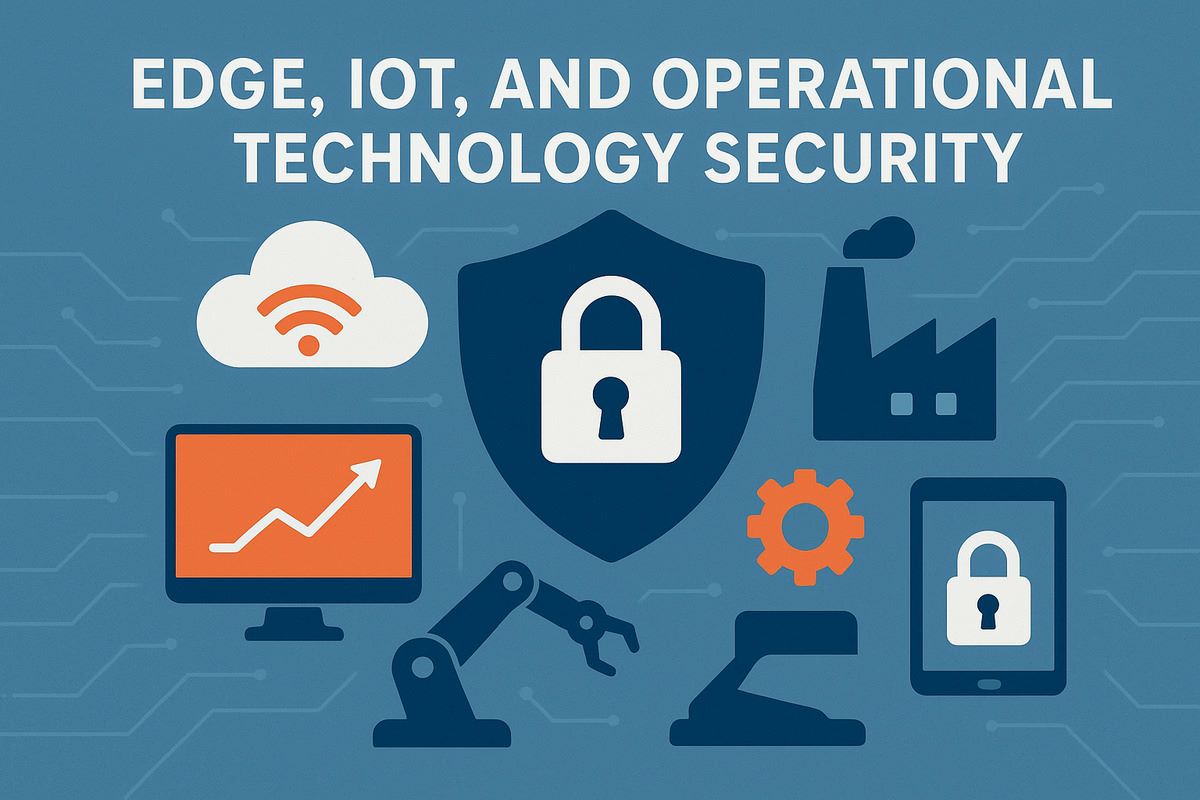
In short: edge security ensures the protection of data and devices at endpoints, IoT security protects connected devices and data privacy, and OT security maintains the continuity and integrity of industrial systems.

Case Study: JPMorgan Chase – Intelligence‑Driven Cyber Defense

JPMorgan Chase, one of the largest financial institutions in the world, employs a proactive, intelligence‑driven cyber defense strategy supported by one of the industry’s biggest technology and security budgets. The firm relies on predictive analytics and advanced threat intelligence to anticipate and neutralize attacks before they can disrupt operations or compromise customer data. A global team of thousands of security professionals continuously hunts for threats, including those posed by nation‑state actors, ensuring that JPMorgan Chase maintains resilience against sophisticated adversaries and protects its critical financial infrastructure.

Content by GuestPosts.biz

Is Your Sales Strategy Still In The “Black Car” Era?

13 Nov 2025 Blog

Any Color They Want, As Long As It’s Black

There’s a famous quote attributed to Henry Ford during the peak of the Fordist production model: “A customer can have a car painted any color he wants, so long as it is black.” This sentence wasn’t just a joke; it summarized the business philosophy of an era, an age where production was king and the customer accepted what was offered. In those times, access to information was limited, competition was scarce, and the prevailing belief was that every supply creates its own demand. The focus of companies was to produce faster and more efficiently. However, that world is now far behind us.

Today, customers are swimming in an endless ocean of choices. So, what does it mean to sell a product in this new, complex market? The answer no longer lies on the production line but in the customer’s mind and in the data. Sales and marketing have transformed from an art into a science. And the newest, most powerful tool of this science is undoubtedly artificial intelligence.

From Product to Customer: The Shift in Marketing Paradigms

With the development of production technologies and knowledge, new entrepreneurs entered the market. To compete with established brands, it became necessary to add a distinct value to a product within the same market. This necessity triggered the birth of the advertising and marketing industries. Companies realized they had to operate not only with a focus on production but also with a focus on the customer and the market. This was the beginning of the process of building a brand’s identity.

The critical questions became: Why should a customer buy your product? Is it to feel special? To enhance their prestige in their social circle? Or because you offer the best price-to-performance ratio? The answer depended on your brand’s identity, your product’s features, and how you marketed it. It was no longer just about selling a car, but about selling a “lifestyle,” a “status symbol,” or a “smart choice.”

From Door to Data: The Evolution of Marketing Tactics

This customer-centric understanding radically changed sales tactics. In the past, there were people who went door-to-door, introducing and trying to sell products, earning commissions on what they sold. With the spread of landline telephones, this physical effort was replaced by telemarketing; salespeople now called you to introduce their products. The rise of the internet and “Big Data” initiated the biggest revolution of all. Now, companies could offer you special campaigns, opportunities, and products by looking at your search history, social media activities, and online behavior.

The one-size-fits-all approach to marketing gave way to individual and personalized marketing. This evolution revealed a fundamental truth: the importance of focusing energy in the right place. For example, marketing a new suitcase to someone who loves to travel is far easier and more efficient than trying to sell the same product to someone who prefers spending their time at home playing PC games. In today’s individual-focused world, people want to feel special. Making small gestures to your loyal customers, such as offering extra points on their next clothing purchase, makes them even more loyal to your brand.

Science and Data Power in Marketing

In short, it’s no longer enough to just manufacture a product, or even to add a unique feature to it. A deep analysis of individual and societal behaviors is required. Marketing has become a science, and the key to success is having the right information about our potential customers and the market. Knowledge is power. For a long time, these analyses were done by humans and various software. But now, as in every other sector, artificial intelligence has made a powerful entrance into this field.

Artificial Intelligence: The New Superpower of Sales

AI offers the potential to accelerate sales and marketing processes while reducing costs. However, this does not mean it will bring an end to the marketing sector. On the contrary, there is a greater need than ever for strategic-thinking, creative, and analytical people to use these tools effectively. Artificial intelligence does not replace a sales professional; it transforms them into a “super-seller.” By automating time-consuming tasks like data analysis, prospecting, and follow-ups, it allows sales professionals to focus on what they do best: building relationships with people and closing deals.

If you want to enhance your skills in a marketing department or accelerate your own business as an individual e-commerce seller, you must learn these next-generation tools. By developing your strategy with AI, you can increase your profitability and get ahead of the competition.

This is where The Blue Whale AI Academy’s “12 AI Tools to Close More Deals” course opens the doors to this new world for you. This course will prepare you for the future by teaching you not only which tools to use, but also how to integrate them into your own sales strategy.

In this vast ocean of information, it’s time to steer the ship in the right direction.

In this vast ocean of information, it’s time to join the crew. Welcome to ‘The Blue Whale AI Academy’.

Contributed by GuestPosts.biz

Emirati Youth Call For Systemic Shift Beyond Traditional Incentives, Reveals White Paper From Al-Futtaim

4 Nov 2025 News

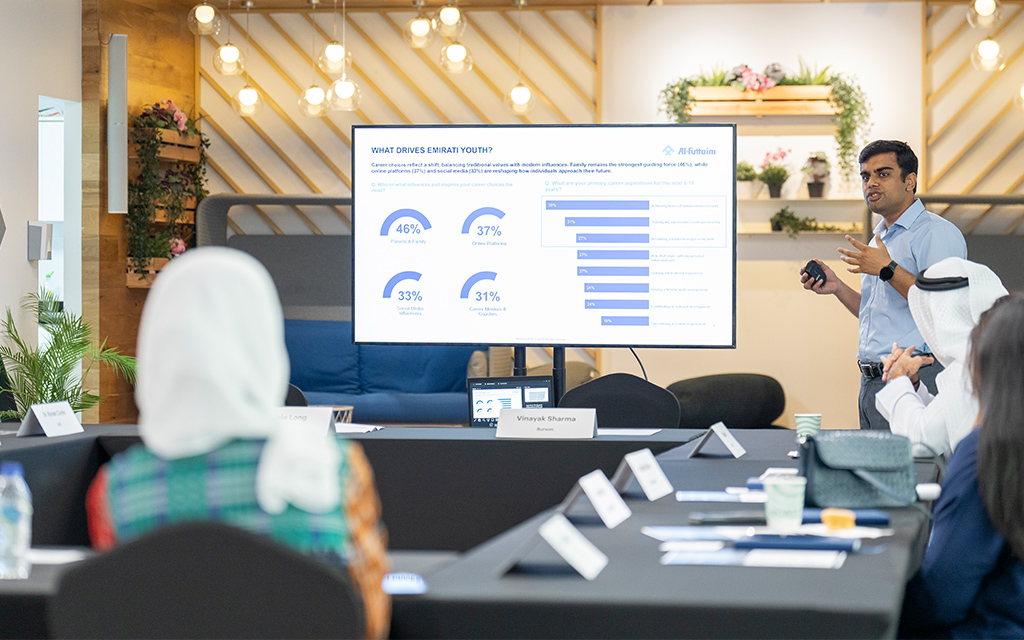
A new white paper launched by Al-Futtaim, in partnership with American University in Dubai (AUD), KPMG Middle East and G42, reveals a significant shift in what Emirati youth seek from their careers. Titled ‘The Future of Emirati Youth: Perspectives from Policymakers, Employers and Youth”, the paper serves as a roadmap for governments, industry and academia to empower the nation’s future workforce by thinking beyond quotas and targets, and instead adopting a quality-based approach to talent development.

Collating insights from a three-part initiative by Al-Futtaim, the paper highlights the evolving aspirations of young Emiratis captured through a survey conducted with 500+ Emiratis aged 18-25. A striking 53% of young Emiratis state that work-life balance is extremely important when selecting an employer, while 51% highlight the importance of a positive and supportive work environment. Moreover, cultural dynamics play a central role in their career journeys, with parents and family highlighted as the primary influence (46%) on career decisions.

For young Emiratis, a great workplace is one that fosters creativity and innovation while celebrating individual achievements, cited by 82% of the respondents. They seek environments that prioritise personal growth (81%), uphold ethical values (81%), and encourage teamwork (79%). With strong leadership, open communication, and collaboration, organisations can build a culture where the next generation feels empowered, valued, and inspired to thrive.

At the same time, certain challenges impede their ambitions, especially when it comes to skills. While 42% are actively thinking about AI’s impact, only 33% highlight data literacy as a factor for success, revealing a disconnect between awareness and practical skills. Furthermore, high competition for entry-level roles (33%), lack of experience (28%) and limited access to training (23%) and mentorship (21%) are cited as common barriers.

Pension disparities also present a notable barrier to private sector engagement. More than half of the young Emiratis surveyed consider pension very important when selecting an employer, yet 48% find government schemes significantly more attractive. Notably, 36% of young Emiratis are open to working abroad, indicating a pressing need for the UAE to cultivate competitive domestic opportunities that can attract and retain its top talent.

“This generation of young Emiratis is actively shaping the future of work with a clear vision of what they seek,” said Mira Al Futtaim, Chairwoman of Emiratisation at Al-Futtaim and Chief Future Education Officer at Al-Futtaim Education Foundation.  “Our research shows they are digitally native, globally aware, and keenly attuned to global trends like AI and automation. However, they also face significant hurdles, including intense competition for entry-level roles and a perceived lack of practical skills. This white paper serves as a critical roadmap for all stakeholders to align our efforts and unlock their immense potential.”

The white paper outlines a comprehensive set of recommendations for government, industry, academia and employees, captured through an exclusive industry roundtable as well as a Youth Circle discussion with young professionals. These include evolving Emiratisation frameworks from quantity to quality, harmonising pension systems, integrating early industry exposure into education, empowering managers as talent developers, and investing in visible national role models. The paper also highlights best practices and case studies from the UAE, spotlighting efforts already underway.

“Educators equip Emirati youth with the skills, mindset, and adaptability needed to thrive a complex world,” said Dr. Kyle Long, President, American University in Dubai (AUD). “By fostering curiosity and critical thinking, they ensure the next generation can seize opportunities, tackle challenges, and drive innovation across the UAE’s society and economy.”

“The insights from this white paper are a clear call to action for every organisation,” said Marketa Simkova, Partner, Head of People, KPMG Middle East. “It underscores that truly effective talent strategies today must go beyond traditional HR and embrace holistic well-being, purpose, and continuous development. As a partner in this initiative, KPMG believes that by collectively implementing these recommendations, we can build a more resilient and engaged Emirati workforce for the future.”

“In an era defined by rapid technological advancement, particularly in AI, preparing our youth for the future of work is not just an option, it’s an imperative,” added Maymee Kurian, Group Chief Human Capital and Culture Officer, G42. “This white paper highlights the critical need to equip young Emiratis with future-ready skills and foster a culture of innovation. G42 is committed to driving this transformation, ensuring our national talent can thrive in and lead the digital economy.”

The paper emphasises that attracting and retaining top Emirati talent requires a fundamental shift in approach. This means prioritising holistic employee well-being through flexible work and supportive cultures, cultivating purpose-driven roles that align with national objectives, and empowering managers to be true talent developers. Furthermore, investing in structured experiential learning and actively advocating for systemic changes like pension harmonisation are crucial steps.

By fostering a collaborative ecosystem that genuinely understands and responds to the aspirations of young Emiratis, we can ensure they are not just participants in the workforce, but empowered leaders driving the nation’s successful future.

Explore findings from the full white paper here.

Search

+