Edge, loT, And Operational Technology Security

21 Nov 2025 Blog

What is Edge Security?

Edge security is the protection of data and services at the point closest to the user or device. The term “edge” refers to network endpoints that are far from data centers or main servers but close to the user. That is, data and operations are secured locally before being sent to the cloud or central servers. In short, edge security is the processing of data close to where it is generated or collected. It protects against threats that may occur at these endpoints.

 Protection methods include:

  1. Securing edge devices against unauthorized access.
  2. Implementing data encryption and authentication.
  3. Monitoring network traffic and device behavior.

Examples include smart camera systems and sensors.

Why is edge security important?

  1. Security controls are performed at the point closest to the data, allowing quick reaction to attacks.
  2. Sensitive information is protected at the edge before reaching the central system, reducing the risk of data leakage.
  3. IoT devices and mobile applications can ensure their own security without relying on a central server.
  4. Data does not always need to travel to central servers, which reduces network traffic.

Examples of edge security:

  1. Edge encryption: Data is encrypted before it leaves the device.
  2. Firewalls and IDS/IPS: Intrusion detection and prevention systems can run on edge devices.
  3. IoT security: Malware protection and attack prevention measures are applied to sensors and smart devices.
  4. Zero trust implementations: Continuous verification is performed without trusting the device or the user by default.

Importance from a cybersecurity perspective:

Processing data at the point where it is generated or collected reduces the risk of attacks during data transmission. In short, edge devices can serve as entry points for cyberattacks, so they must be carefully protected. Unauthorized access can lead to device compromise, data theft, and manipulation, and malicious software may infect the device. It is essential to take precautions in these areas. Various protection methods should be used:

  1. Implement authentication and regularly monitor access controls.
  2. Use data encryption and secure communication protocols.
  3. Continuously monitor network traffic and device behavior.

What is IoT Security?

IoT security is the process of ensuring the security of Internet of Things devices and networks. Examples of these include a wide range of IoT devices such as smart home appliances and industrial sensors. These devices send and receive data over the Internet. IoT security protects these devices from cyberattacks, data theft, and unauthorized access. In short, IoT devices are exposed to cyber threats because they are connected to the internet. IoT security aims to protect these devices and the data they collect.

Protection methods include:

  1. Device authentication and authorization
  2. Applying software updates and patches
  3. Ensuring data privacy and integrity

Why is IoT important?

  1. Attacks on industrial or home automation systems can lead to serious physical consequences.
  2. Every new IoT device can create a new security vulnerability within the network.
  3. IoT devices often collect personal or sensitive data, such as health information or home security data.

IoT security measures:

  1. Encryption: Ensuring that data transferred between devices is encrypted.
  2. Device security: Making sure devices are secure during the manufacturing stage and supported with firmware updates.
  3. Access control: Preventing unauthorized access to devices and using strong authentication systems.
  4. Updates and patches: Keeping device software continuously up to date.
  5. Network security: Ensuring IoT devices communicate over secure networks and using firewalls and IDS/IPS systems.

Importance from a cybersecurity perspective:

 IoT devices are connected to the internet, making them exposed targets for cyberattacks. A breach in device security can put both personal data and connected systems at risk.

Cyber threats include:

  1. Botnet attacks
  2. Data leaks and privacy breaches
  3. Exploitation of firmware or software vulnerabilities

It is necessary to take precautions against these threats. Implementing device authentication and authorization, regularly applying software updates and patches, and ensuring data privacy and integrity can help prevent these threats to a certain extent.

What is OT Security?

OT security is the process of protecting operational technology systems used in critical areas from cyber threats. For example, it is used in energy plants, electrical, water, and transportation infrastructures. OT involves the systems that manage and control physical processes. In short, OT refers to the hardware and software systems used in industrial environments. OT systems must remain continuously operational because updates or interruptions must be kept to a minimum.

Systems used in OT are the “brains” of automation and directly control physical machines.

These include:

  1. SCADA systems
  2. Programmable Logic Controllers (PLC)
  3. Distributed Control Systems (DCS)
  4. Industrial robots
  5. Energy distribution control systems
  6. Manufacturing/production machines

Why is OT security important?

  1. It can lead to physical consequences: An attack can halt a production line, cause power outages, or damage machines.
  2. Critical infrastructures can be affected: Systems such as water, energy, and transportation may be disrupted.
  3. Many OT devices are very old: Since they lack modern security features, they can create significant risks.
  4. Increased connectivity increases risk: OT systems are now being connected to IT networks, making them more exposed to cyber threats.

Importance from a cybersecurity perspective:

OT systems are critical components of industrial infrastructure. If attacked, they can cause production interruptions or physical damage. Traditional IT security methods cannot always be applied because these systems must operate continuously. It is essential to be cautious against potential cyber threats in this area. Industrial control systems (ICS) can be hacked, ransomware and sabotage attacks may occur, and the integrity of physical and digital systems can be compromised.

For this reason, ICS and SCADA systems should be securely monitored, network segmentation and firewalls should be implemented, and physical security should be integrated with cybersecurity.

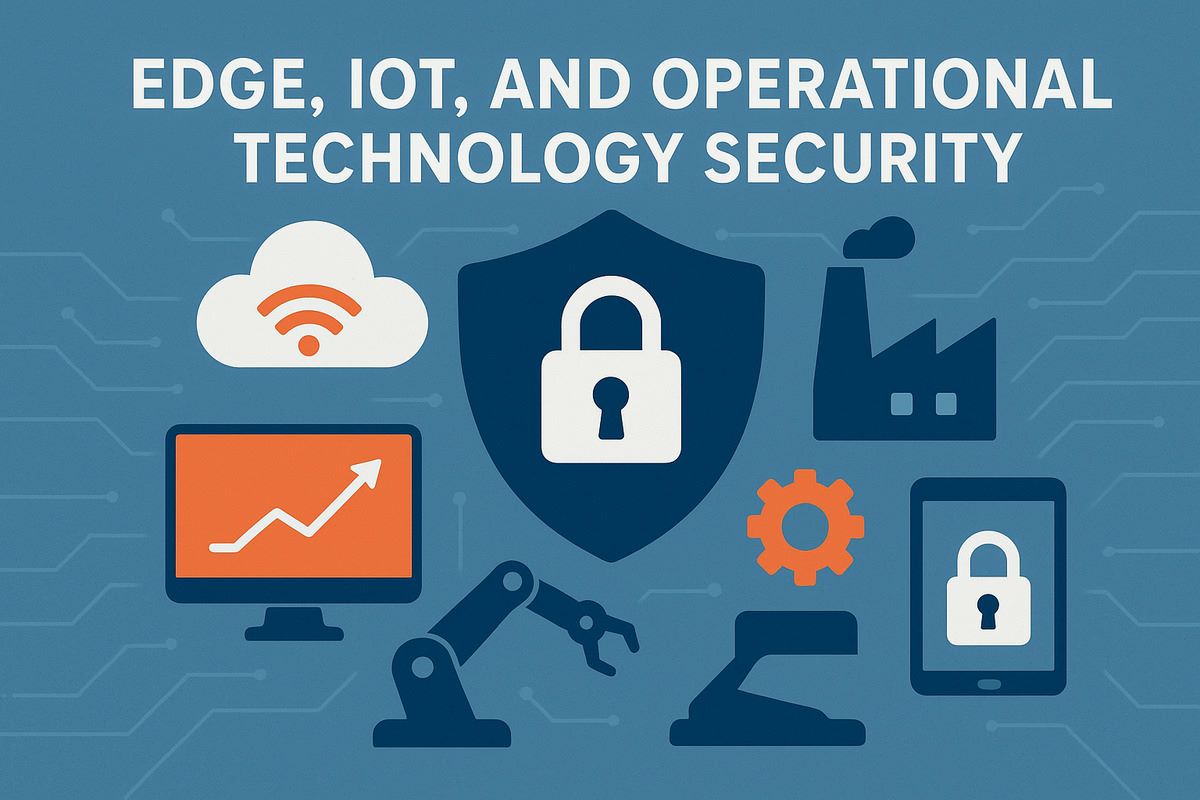
In short: edge security ensures the protection of data and devices at endpoints, IoT security protects connected devices and data privacy, and OT security maintains the continuity and integrity of industrial systems.

Case Study: JPMorgan Chase – Intelligence‑Driven Cyber Defense

JPMorgan Chase, one of the largest financial institutions in the world, employs a proactive, intelligence‑driven cyber defense strategy supported by one of the industry’s biggest technology and security budgets. The firm relies on predictive analytics and advanced threat intelligence to anticipate and neutralize attacks before they can disrupt operations or compromise customer data. A global team of thousands of security professionals continuously hunts for threats, including those posed by nation‑state actors, ensuring that JPMorgan Chase maintains resilience against sophisticated adversaries and protects its critical financial infrastructure.

Content by GuestPosts.biz

Is Your Sales Strategy Still In The “Black Car” Era?

13 Nov 2025 Blog

Any Color They Want, As Long As It’s Black

There’s a famous quote attributed to Henry Ford during the peak of the Fordist production model: “A customer can have a car painted any color he wants, so long as it is black.” This sentence wasn’t just a joke; it summarized the business philosophy of an era, an age where production was king and the customer accepted what was offered. In those times, access to information was limited, competition was scarce, and the prevailing belief was that every supply creates its own demand. The focus of companies was to produce faster and more efficiently. However, that world is now far behind us.

Today, customers are swimming in an endless ocean of choices. So, what does it mean to sell a product in this new, complex market? The answer no longer lies on the production line but in the customer’s mind and in the data. Sales and marketing have transformed from an art into a science. And the newest, most powerful tool of this science is undoubtedly artificial intelligence.

From Product to Customer: The Shift in Marketing Paradigms

With the development of production technologies and knowledge, new entrepreneurs entered the market. To compete with established brands, it became necessary to add a distinct value to a product within the same market. This necessity triggered the birth of the advertising and marketing industries. Companies realized they had to operate not only with a focus on production but also with a focus on the customer and the market. This was the beginning of the process of building a brand’s identity.

The critical questions became: Why should a customer buy your product? Is it to feel special? To enhance their prestige in their social circle? Or because you offer the best price-to-performance ratio? The answer depended on your brand’s identity, your product’s features, and how you marketed it. It was no longer just about selling a car, but about selling a “lifestyle,” a “status symbol,” or a “smart choice.”

From Door to Data: The Evolution of Marketing Tactics

This customer-centric understanding radically changed sales tactics. In the past, there were people who went door-to-door, introducing and trying to sell products, earning commissions on what they sold. With the spread of landline telephones, this physical effort was replaced by telemarketing; salespeople now called you to introduce their products. The rise of the internet and “Big Data” initiated the biggest revolution of all. Now, companies could offer you special campaigns, opportunities, and products by looking at your search history, social media activities, and online behavior.

The one-size-fits-all approach to marketing gave way to individual and personalized marketing. This evolution revealed a fundamental truth: the importance of focusing energy in the right place. For example, marketing a new suitcase to someone who loves to travel is far easier and more efficient than trying to sell the same product to someone who prefers spending their time at home playing PC games. In today’s individual-focused world, people want to feel special. Making small gestures to your loyal customers, such as offering extra points on their next clothing purchase, makes them even more loyal to your brand.

Science and Data Power in Marketing

In short, it’s no longer enough to just manufacture a product, or even to add a unique feature to it. A deep analysis of individual and societal behaviors is required. Marketing has become a science, and the key to success is having the right information about our potential customers and the market. Knowledge is power. For a long time, these analyses were done by humans and various software. But now, as in every other sector, artificial intelligence has made a powerful entrance into this field.

Artificial Intelligence: The New Superpower of Sales

AI offers the potential to accelerate sales and marketing processes while reducing costs. However, this does not mean it will bring an end to the marketing sector. On the contrary, there is a greater need than ever for strategic-thinking, creative, and analytical people to use these tools effectively. Artificial intelligence does not replace a sales professional; it transforms them into a “super-seller.” By automating time-consuming tasks like data analysis, prospecting, and follow-ups, it allows sales professionals to focus on what they do best: building relationships with people and closing deals.

If you want to enhance your skills in a marketing department or accelerate your own business as an individual e-commerce seller, you must learn these next-generation tools. By developing your strategy with AI, you can increase your profitability and get ahead of the competition.

This is where The Blue Whale AI Academy’s “12 AI Tools to Close More Deals” course opens the doors to this new world for you. This course will prepare you for the future by teaching you not only which tools to use, but also how to integrate them into your own sales strategy.

In this vast ocean of information, it’s time to steer the ship in the right direction.

In this vast ocean of information, it’s time to join the crew. Welcome to ‘The Blue Whale AI Academy’.

Contributed by GuestPosts.biz

Emirati Youth Call For Systemic Shift Beyond Traditional Incentives, Reveals White Paper From Al-Futtaim

4 Nov 2025 News

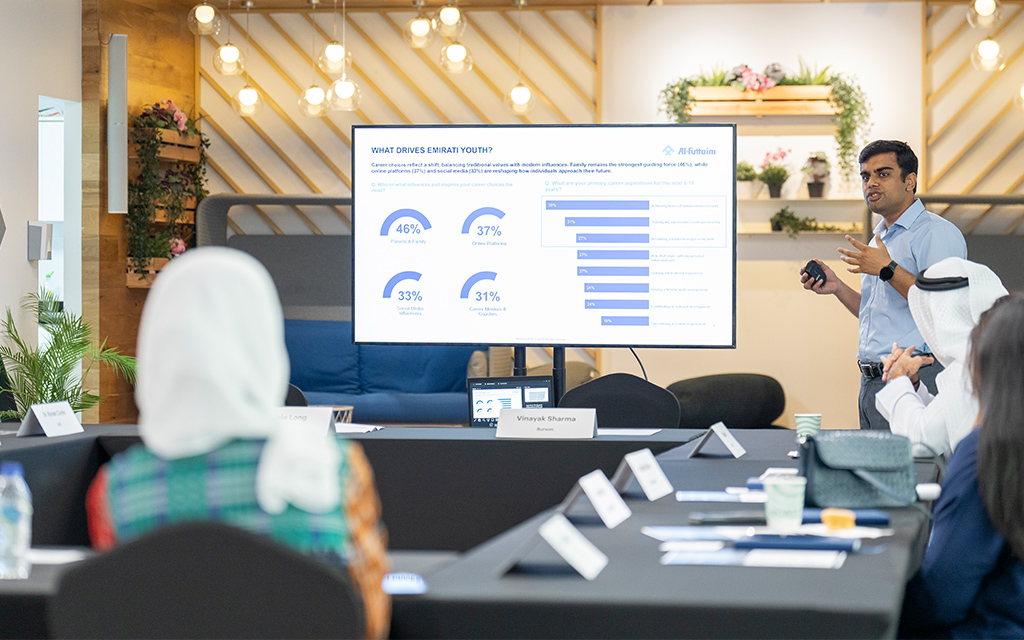
A new white paper launched by Al-Futtaim, in partnership with American University in Dubai (AUD), KPMG Middle East and G42, reveals a significant shift in what Emirati youth seek from their careers. Titled ‘The Future of Emirati Youth: Perspectives from Policymakers, Employers and Youth”, the paper serves as a roadmap for governments, industry and academia to empower the nation’s future workforce by thinking beyond quotas and targets, and instead adopting a quality-based approach to talent development.

Collating insights from a three-part initiative by Al-Futtaim, the paper highlights the evolving aspirations of young Emiratis captured through a survey conducted with 500+ Emiratis aged 18-25. A striking 53% of young Emiratis state that work-life balance is extremely important when selecting an employer, while 51% highlight the importance of a positive and supportive work environment. Moreover, cultural dynamics play a central role in their career journeys, with parents and family highlighted as the primary influence (46%) on career decisions.

For young Emiratis, a great workplace is one that fosters creativity and innovation while celebrating individual achievements, cited by 82% of the respondents. They seek environments that prioritise personal growth (81%), uphold ethical values (81%), and encourage teamwork (79%). With strong leadership, open communication, and collaboration, organisations can build a culture where the next generation feels empowered, valued, and inspired to thrive.

At the same time, certain challenges impede their ambitions, especially when it comes to skills. While 42% are actively thinking about AI’s impact, only 33% highlight data literacy as a factor for success, revealing a disconnect between awareness and practical skills. Furthermore, high competition for entry-level roles (33%), lack of experience (28%) and limited access to training (23%) and mentorship (21%) are cited as common barriers.

Pension disparities also present a notable barrier to private sector engagement. More than half of the young Emiratis surveyed consider pension very important when selecting an employer, yet 48% find government schemes significantly more attractive. Notably, 36% of young Emiratis are open to working abroad, indicating a pressing need for the UAE to cultivate competitive domestic opportunities that can attract and retain its top talent.

“This generation of young Emiratis is actively shaping the future of work with a clear vision of what they seek,” said Mira Al Futtaim, Chairwoman of Emiratisation at Al-Futtaim and Chief Future Education Officer at Al-Futtaim Education Foundation.  “Our research shows they are digitally native, globally aware, and keenly attuned to global trends like AI and automation. However, they also face significant hurdles, including intense competition for entry-level roles and a perceived lack of practical skills. This white paper serves as a critical roadmap for all stakeholders to align our efforts and unlock their immense potential.”

The white paper outlines a comprehensive set of recommendations for government, industry, academia and employees, captured through an exclusive industry roundtable as well as a Youth Circle discussion with young professionals. These include evolving Emiratisation frameworks from quantity to quality, harmonising pension systems, integrating early industry exposure into education, empowering managers as talent developers, and investing in visible national role models. The paper also highlights best practices and case studies from the UAE, spotlighting efforts already underway.

“Educators equip Emirati youth with the skills, mindset, and adaptability needed to thrive a complex world,” said Dr. Kyle Long, President, American University in Dubai (AUD). “By fostering curiosity and critical thinking, they ensure the next generation can seize opportunities, tackle challenges, and drive innovation across the UAE’s society and economy.”

“The insights from this white paper are a clear call to action for every organisation,” said Marketa Simkova, Partner, Head of People, KPMG Middle East. “It underscores that truly effective talent strategies today must go beyond traditional HR and embrace holistic well-being, purpose, and continuous development. As a partner in this initiative, KPMG believes that by collectively implementing these recommendations, we can build a more resilient and engaged Emirati workforce for the future.”

“In an era defined by rapid technological advancement, particularly in AI, preparing our youth for the future of work is not just an option, it’s an imperative,” added Maymee Kurian, Group Chief Human Capital and Culture Officer, G42. “This white paper highlights the critical need to equip young Emiratis with future-ready skills and foster a culture of innovation. G42 is committed to driving this transformation, ensuring our national talent can thrive in and lead the digital economy.”

The paper emphasises that attracting and retaining top Emirati talent requires a fundamental shift in approach. This means prioritising holistic employee well-being through flexible work and supportive cultures, cultivating purpose-driven roles that align with national objectives, and empowering managers to be true talent developers. Furthermore, investing in structured experiential learning and actively advocating for systemic changes like pension harmonisation are crucial steps.

By fostering a collaborative ecosystem that genuinely understands and responds to the aspirations of young Emiratis, we can ensure they are not just participants in the workforce, but empowered leaders driving the nation’s successful future.

Explore findings from the full white paper here.

Cyber Gear Launches Crypto Unplugged

23 Oct 2025 Blog

Cryptocurrency has evolved from a digital curiosity into a powerful global movement that’s reshaping how we think about money, technology, and trust. As the world becomes increasingly digital, the rise of decentralized currencies like Bitcoin, Ethereum, and others represents more than a financial trend, it signals the beginning of a new economic era.

The reasons behind crypto’s growing dominance lie in its core principles: decentralization, transparency, accessibility, and innovation.

According to Sharad Agarwal, CEO of Cyber Gear, “Cryptocurrency is not just about money, it’s about empowerment. It challenges outdated systems, promotes transparency, and unlocks opportunities for millions worldwide. As technology continues to advance and adoption grows, crypto’s influence will only deepen. Whether through decentralized finance, digital ownership, or borderless payments, cryptocurrency is laying the foundation for a more open, inclusive, and innovative global economy. We believe the future is digitaland crypto is leading the way. CryptoUnplugged.ai, decodes the jargon and provides insights to this new world order.”

At the heart of cryptocurrency is decentralization, a system where control is not in the hands of governments or central banks, but distributed across networks of computers worldwide. This structure ensures that no single authority can manipulate supply, freeze accounts, or impose unfair restrictions. For millions of people living in countries with unstable currencies or strict financial systems, crypto offers a form of true economic freedom. With just an internet connection, anyone can store, send, and receive value without intermediaries. This borderless and permissionless nature of cryptocurrency is one of the key reasons why it is viewed as the future of finance.

The blockchain technology that powers cryptocurrencies is equally revolutionary. A blockchain is a digital ledger that records every transaction transparently and immutably. Once data is entered, it cannot be altered or deleted, making fraud nearly impossible. This level of transparency and security is something traditional financial systems struggle to match. Beyond currencies, blockchain technology has opened the door to countless innovations—smart contracts, decentralized finance (DeFi), and non-fungible tokens (NFTs), to name a few. These tools are reshaping industries from art and real estate to logistics and entertainment, proving that blockchain’s potential extends far beyond digital money.

Another compelling reason crypto represents the future is financial inclusion. Around the world, more than 1.7 billion adults still lack access to traditional banking. Yet, most of them own mobile phones. Cryptocurrencies bridge this gap by allowing people to participate in the digital economy directly, without needing a bank account. Through DeFi platforms, users can lend, borrow, save, and invest, all on their own terms. This accessibility empowers individuals, especially in developing regions, giving them opportunities that were once limited to those with access to major financial institutions.

Speed and efficiency also set crypto apart from traditional systems. Cross-border payments that used to take days and involve hefty fees can now be completed in seconds at minimal cost. Whether sending money to family abroad or conducting business across continents, cryptocurrency enables seamless and low-cost transactions. This speed and global reach make it particularly appealing to businesses, freelancers, and global investors in a connected economy.

Investors, too, are recognizing cryptocurrency as a new asset class with long-term potential. While volatile, assets like Bitcoin have demonstrated resilience and consistent growth over time. Institutional investors, major corporations, and even governments are now entering the crypto space, signaling mainstream acceptance. As inflation and currency devaluation impact traditional markets, many see crypto as a hedge, an alternative store of value that operates outside the constraints of conventional finance.

Perhaps most exciting is crypto’s role in shaping the next generation of the internet, Web3. This vision of a decentralized web puts users back in control of their data, identity, and digital assets. Through blockchain-based applications, creators can monetize their work directly, communities can govern themselves transparently, and innovation can thrive without centralized control. It’s a shift toward a fairer, more democratic digital ecosystem.

Crypto and Cloud Mining companies can promote their business online through GuestPosts.biz

Global E-Commerce Marketing Trends

18 Oct 2025 Blog

The world of e-commerce marketing is evolving at an unprecedented pace, driven by technological advancements and changing consumer behaviors. Today’s successful brands rely on a blend of data-driven insights, personalized experiences, and omnichannel strategies to stay ahead. Social commerce, influencer partnerships, and AI-powered recommendations have become key players in attracting and retaining customers.

With consumers spending more time on social media and mobile devices, brands have shifted their focus toward real-time engagement and storytelling that builds emotional connections. Video content, particularly short-form clips, dominates marketing campaigns because of its ability to capture attention quickly and convey messages effectively. Moreover, sustainability, authenticity, and inclusivity have become essential values that consumers expect brands to demonstrate in both messaging and operations. Businesses that align their marketing with these evolving values are the ones achieving long-term loyalty in today’s crowded e-commerce landscape.

Looking ahead, the future of e-commerce marketing will be defined by hyper-personalization, immersive shopping experiences, and predictive technology. Artificial intelligence will play a larger role in understanding consumer intent, enabling marketers to deliver the right message to the right person at the right time. Virtual and augmented reality will enhance online shopping, allowing customers to “try before they buy” from the comfort of their homes. Blockchain technology may also bring more transparency to supply chains and advertising practices, increasing trust between brands and consumers.

Additionally, voice commerce and conversational AI will reshape the way people search and shop, making the online experience even more seamless. In the next few years, marketing success will depend on a brand’s ability to adapt, innovate, and maintain authenticity while leveraging technology to create meaningful connections with customers across the globe.

To promote your business visit – GuestPosts.biz

Sharjah: The Cultural Capital Of The Arab World

18 Oct 2025 Blog

Sharjah, one of the seven emirates of the United Arab Emirates, proudly holds the title of Cultural Capital of the Arab World, a recognition bestowed by UNESCO in 1998. This title is not merely symbolic, it reflects the emirate’s unwavering commitment to preserving Arab heritage, promoting education, and fostering creativity across generations. Sharjah has built its reputation as a hub where tradition meets modernity, offering a cultural experience that is both authentic and forward-looking.

Unlike its glitzy neighbors, Sharjah has focused its development around arts, culture, and heritage. The city is home to more than 20 museums, including the Sharjah Art Museum, the Sharjah Museum of Islamic Civilization, and the Sharjah Heritage Museum, each narrating a unique story about the region’s history, art, and way of life. The Heart of Sharjah, a beautifully restored historic district, takes visitors back in time through its traditional architecture, souks, and cultural performances.

One of Sharjah’s most celebrated contributions to culture is its dedication to literature and learning. The Sharjah International Book Fair has become one of the largest literary events in the world, attracting publishers, authors, and readers from over 100 countries. In 2019, this passion for books led to another milestone, Sharjah was named UNESCO World Book Capital, reaffirming its role as a global beacon for knowledge and education.

Art also plays a vital role in Sharjah’s identity. The Sharjah Art Foundation hosts regular exhibitions, film screenings, and the prestigious Sharjah Biennial, which attracts contemporary artists from around the world. These initiatives have transformed the emirate into a dynamic platform for artistic dialogue and innovation while maintaining strong ties to Arab identity and values.

Top 10 business events in Sharjah

  1. Evolve future Mobility Show
  • Date:- 15-18 October 2025
  • Venue:- Expo Centre Sharjah
  • Timings:- 10:00 AM- 6:00 PM
  • Summary:- The region’s leading EV/Sustainable mobility expo. Showcases electric vehicles, infrastructure and related solutions; convenes industry leaders, policymakers and innovators.
  1. Sharjah Tech & Innovation Summit
  • Venue: Al Jawaher Reception and Convention Centre
  • Dates:- November 3, 2025
  • Timings:- 9:00 AM- 4:00 PM
  • Summary:- A one-day summit exploring AI, blockchain and digital transformation in the UAE’s public and private sectors. Includes keynote panels and startup pitches.
  1. Sharjah Business Service Expo
  • Venue:- The view by Nawras Hospitality
  • Dates: October 29-30, 2025
  • Timings:- 10:00 AM – 5:00 PM
  • Summary:- A niche event for legal, accounting, HR and IT service providers to connect with SMEs and startups. Includes workshops on compliance and digital tools.
  1. Green Economy Forum
  • Venue: Jory Hall
  • Dates:- November 14, 2025
  • Timings:- 9:30 AM – 3:30 PM
  • Summary:- A sustainability-focused forum discussing ESG frameworks, green finance and circular economy models in the Gulf region
  1. Future of Work Conference
  • Venue:- Nawras Hospitality
  • Dates:- October 26, 2025
  • Timings:- 10:00 AM – 4:00 PM
  • Summary:- Explores hybrid work models, talent retention and workplace tech. Features speakers from HR tech startups and UAE-based corporates.
  1. SME Growth & Investment Forum
  • Venue:- AI Miqat Part Hall- Sharjah
  • Dates:- November 9, 2025
  • Timings:- 10:00 AM – 3:00 PM
  • Summary:- A networking and funding event for small and medium enterprises. Includes investor panels, pitch sessions and government support programs.
  1. Sharjah Investment Forum
  • Venue:- Al Jawaher Reception & Convention Centre
  • Dates:- October 22-23, 2025
  • Timings:- Full Day Event (Sessions and meetings run from morning to late afternoon)
  • Summary:- Focuses on Foreign Direct Investment (FDI) Investment strategies for a resilient and sustainable future, co-hosts with the World Investment Conference.
  1. International Conference on Advances in Business Management and Information Science
  • Dates:- Dec 2, 2025
  • Venues:- Sharjah, UAE (Venue TBC)
  • Timings:- Full Day Conference (Typically 9:00 AM – 5:00 PM for academic events)
  • Summary:- A platform for professionals to present research and discuss advancements in Business Management and Information Science Disciplines.
  1. Build Expo Sharjah 2025
  • Venue:- Expo Centre Sharjah
  • Dates:- November 10-12, 2025
  • Timings:- 10:00 AM – 6:00 PM
  • Summary:- A construction and infrastructure exhibition showcasing building materials, smart city solutions and sustainable architecture.
  1. Sharjah Publishers Conference 2025
  • Venue:- Expo Centre Sharjah
  • Dates:- 2-4 November 2025
  • Timings:- 9:00 AM – 6:00 PM
  • Summary:- A pre-event to the Sharjah Book Fair, this conference gathers publishers, editors, distributors and digital platform owners to explore trends in publishing,rights trading and global literary collaborations

To promote your business in UAE, visit GuestPosts.biz

Abu Dhabi Sees Exponential Growth: The Capital’s Next Economic Era

17 Oct 2025 Blog

Abu Dhabi, the capital of the United Arab Emirates, is entering a new era of exponential growth, transforming from a regional powerhouse into a global hub for innovation, business, and sustainability. Over the past few years, the city’s diversification strategy has accelerated across key sectors such as energy, tourism, real estate, and technology, reshaping its economic identity and global appeal.

The foundation of Abu Dhabi’s growth lies in its long-term vision and strategic planning. Through initiatives like Abu Dhabi Economic Vision 2030, the emirate has successfully reduced its dependence on oil revenues and created an environment conducive to investment and entrepreneurship. The city has been steadily attracting international businesses, offering tax incentives, state-of-the-art infrastructure, and free zones designed to nurture startups and global enterprises alike.

One of the most impressive areas of expansion is technology and innovation. The establishment of Hub71, the emirate’s global tech ecosystem, has drawn hundreds of startups from around the world. Supported by government-backed funds and partnerships with leading venture capitalists, Abu Dhabi is positioning itself as a future-ready city, where artificial intelligence, fintech, and sustainable technologies thrive. The government’s focus on digital transformation, AI research, and smart infrastructure continues to place the emirate among the world’s fastest-developing innovation centers.

Here are 10 major business events happening in Abu Dhabi from Mid-October to December 2025, including venue, dates and daily timings.

  1. ADIPEC 2025- Abu Dhabi International Exhibition & Conference
  • Venue- Abu Dhabi National Exhibition Centre (ADNEC)
  • Dates- November 3-6, 2025
  • Timings:- 10:00AM-6:00 PM
  • Summary:– One of the world’s largest energy events, ADIPEC brings together 160,000+ attendees and 2,200+ exhibitors. It covers oil, gas, renewables and decarbonization strategies, with high level panels and technical sessions.

2. Fintech Abu Dhabi Festival

  • Venue:- ADGM (Abu Dhabi Global Market)
  • Dates:- November 11-13, 2025
  • Timings:- 9:00 AM-5:00 PM
  • Summary:- Hosted by ADGM, this festival features global fintech leaders, regulators and startups. Topics include digital banking, blockchain and financial inclusion with pitch competitions and networking lounges.

3. Global Manufacturing and Industrialisation Summit (GMIS)

  • Venue- ADNEC
  • Dates:- October 28-30, 2025
  • Timings:- 9:30 AM- 5:30 PM
  • Summary:- GIMS unites manufacturers, tech leaders, and policymakers to explore industry 4.0, AI and sustainable production. Its a key event for industrial innovation and global collaboration.

4. International Real Estate and Investment Show (IREIS)

  • Venue:- ADNEC
  • Dates:- November 20-22, 2025
  • Timings:- 10:00 AM- 6:00 PM
  • Summary:- A B2C and B2B platforms for global property developers, investors and brokers. IREIS showcases residential and commercial projects, offering seminars on investments trends and legal frameworks.

5. Jewellery& Watch Show Abu Dhabi (JWS)

  • Venue:- ADNEC, Halls 1-3
  • Dates:- November 12-16, 2025
  • Timings:- 11:00 AM- 7:00 PM
  • Summary:- A luxury showcase of fine jewelry and watches, connecting designers and retailers and collectors. Includes fashion shows and exclusive launches

6. Abu Dhabi Cybersecurity Conference

  • Venue:- ADNEC
  • Dates:- November 25-26,2025
  • Timings:- 9:00 AM-4:30PM
  • Summary:- A strategic forum CISOs, tech leaders, and regulators. Topics include threat intelligence, AI in security and national cyber resilience.

7. World Conversation Congress (IUCN)

  • Venue:- ADNEC, ICC hall & Marina Hall
  • Dates:- October 9-15, 2025
  • Timings:- 9:00 AM-5:PM
  • Summary:- A global summit on biodiversity, climate action and conservation policy. It features scientific panels, NGO showcases and government roundtables.

8. Forbes ME sustainability Leaders Summit

  • Venue:- ADNEC, Marina Hall 2
  • Dates:- October 14-15, 2025
  • Timings:- 10:00 AM – 4:– PM
  • Summary:- A high-level gathering of CEOs, policy makers, and ESG strategists. Focuses on sustainable finance. Corporate, responsibility and innovation.

9. Najah Abu Dhabi- Education & Career Fair

  • Venue:- ADNEC, Halls 2-3
  • Dates:- October 19-21, 2025
  • Timings:- 10:00 AM- 6:00 PM
  • Summary:- A major platform for students and job seekers to connect with universities, employers and training providers. Include workshops and career guidance.

10. Global Food Week

  • Venue:- ADNEC, Halls 4-11
  • Dates:- October 21-23,2025
  • Timings:- 10:00AM – 6:30PM
  • Summary:- A trade show focused on food innovation, sustainability and agritech. Features tastings, panels and B2B matchmaking.

As Abu Dhabi continues to rise, the focus remains clear: building a knowledge-based economy that values innovation, sustainability, and inclusivity. With a blend of global vision and local ambition, the capital of the UAE is not just growing, it’s redefining what exponential progress looks like in the modern world.

The Art and Science of Cloud Mining

13 Oct 2025 Blog

In today’s digital economy, cryptocurrencies have evolved from niche assets into mainstream financial instruments. Among the many ways to acquire crypto, cloud mining has emerged as a fascinating blend of art and science—an approach that makes mining accessible to almost anyone without the need for technical expertise or expensive hardware. Understanding how it works and the balance between its opportunities and risks can help both investors and tech enthusiasts make smarter decisions in the digital mining landscape.

What Is Cloud Mining?

Cloud mining allows individuals to participate in cryptocurrency mining without owning or managing physical mining equipment. Instead, users rent computing power, often called “hash power”, from a remote data center operated by a service provider. The provider handles hardware setup, electricity, cooling, and maintenance, while the customer earns a share of the mined cryptocurrency based on the amount of hash power purchased.

This model eliminates the barriers of traditional mining, which requires costly ASIC machines, large electricity consumption, and constant maintenance. With cloud mining, users can start mining Bitcoin, Ethereum, or other coins with just an internet connection and a contract purchase.

The Science Behind Cloud Mining

At its core, cloud mining operates on the mathematical principles of blockchain consensus mechanisms, primarily Proof of Work (PoW). In PoW mining, miners compete to solve complex cryptographic puzzles to validate transactions and secure the blockchain network. The process demands high computational power, which is where cloud mining data centers excel.

These data centers often house thousands of high-performance mining rigs operating simultaneously. Advanced algorithms distribute tasks across machines, optimizing energy use and ensuring continuous uptime. Cloud mining companies leverage economies of scalebulk hardware purchasing, cheap electricity rates, and optimized cooling systems, to maximize profitability and efficiency.

The mining rewards, typically in Bitcoin or another cryptocurrency, are then distributed to users based on their contracted share of computing power. While this process is entirely scientific and technology-driven, there’s also an art to it—especially in timing, strategy, and provider selection.

The Art of Cloud Mining

The “art” of cloud mining lies in strategic decision-making. Investors must evaluate which cryptocurrency to mine, which provider to trust, and when to enter or exit the market. Cryptocurrency prices are highly volatile, meaning that the profitability of mining can fluctuate drastically based on market conditions, block rewards, and network difficulty.

Successful cloud miners often study market trends, mining difficulty charts, and energy price fluctuations before committing to a plan. They diversify their investments across multiple cryptocurrencies or platforms to spread risk. Choosing the right provider is another art form—investors must assess transparency, data center location, contract terms, payout frequency, and historical performance.

Many fraudulent platforms pose as legitimate cloud mining services, promising high returns but disappearing with investors’ funds. Therefore, due diligence, community feedback, and independent audits are crucial before investing.

Advantages:

Accessibility: No need for hardware or technical knowledge.

Scalability: Users can easily increase or decrease mining power.

Convenience: The provider handles all operational logistics.

Disadvantages:

Risk of Scams: The cloud mining industry has seen numerous fraudulent schemes.

Lack of Control: Users depend on the provider for transparency and maintenance.

Market Volatility: Returns can drop if crypto prices fall or mining difficulty rises.

With the growing adoption of renewable energy and the rise of green mining initiatives, the future of cloud mining looks promising. Some providers now use solar, hydro, or wind power to reduce environmental impact, while others integrate AI-based optimization to improve performance and profitability.

As blockchain technology evolves, cloud mining may become even more decentralized and transparent, potentially using smart contracts to automate payouts and eliminate fraud.

The art and science of cloud mining lie in the perfect balance between technology and strategy. It’s a field where data centers and cryptography meet human judgment and timing. For those who approach it wisely, cloud mining offers a gateway into the world of digital assets, blending innovation, opportunity, and a touch of risk into a truly modern form of wealth creation.

Contributed by GuestPosts.biz

The Global Backlink Market Size: A Multi-Billion Dollar Industry Driving SEO Growth

10 Oct 2025 Blog

Backlinks remain one of the most influential factors in search engine optimization (SEO). As businesses around the world compete for visibility and authority online, the demand for high-quality backlinks has evolved into a multi-billion dollar global market. Although exact figures are difficult to pinpoint, because backlink acquisition spans both legitimate and grey-hat sectorsdata from SEO industry reports and spending models suggest the global backlink and link-building services market is worth tens of billions of dollars annually, and it continues to grow rapidly.

To estimate the backlink market, we begin with the broader SEO services industry, which forms its foundation. According to Mordor Intelligence, the global SEO services market is projected to reach USD 74.9 billion by 2025 and grow to USD 127 billion by 2030. This encompasses on-page optimization, keyword research, content marketing, and link building the last of which consistently commands a significant portion of total SEO budgets.

Surveys from multiple SEO studies indicate that link building typically accounts for 28% to 36% of overall SEO spending. Companies allocate this portion to acquire authoritative backlinks, manage outreach, and strengthen domain authority through guest posts, digital PR, and influencer collaborations. By applying these ratios, the total link-building spend in 2025 is estimated between $21 billion and $27 billion, rising to $35 billion–$46 billion by 2030.

The Paid Backlink Services Segment

Of this link-building expenditure, not all is managed in-house. A large share is outsourced to specialized agencies, freelancers, and platforms offering link-building campaigns, outreach management, and backlink placement services. Studies show that 40% to 70% of companies outsource at least part of their link-building efforts, creating a distinct “paid backlink services” market.

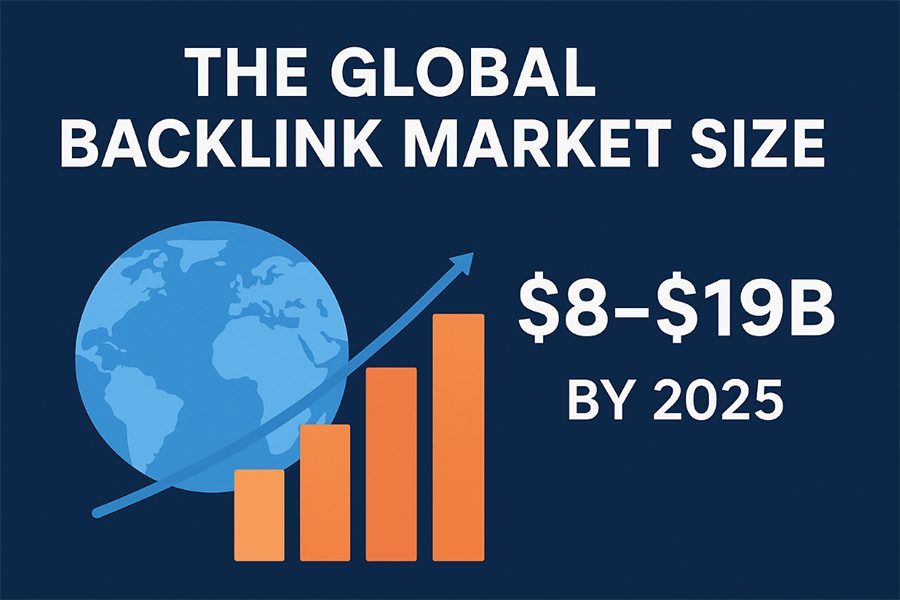
When these outsourcing ratios are applied to the total link-building spend, the paid backlink services market is valued between $8 billion and $19 billion in 2025, depending on the model used. By 2030, this could grow to between $16 billion and $32 billion. This projection highlights how crucial backlinks remain for businesses seeking online growth and visibility, and how much of that work is delegated to external providers.

Why the Market Is Growing

Several trends are fueling the rise of the backlink economy:

  1. Competition for authority: As search algorithms become more sophisticated, backlinks from trusted, relevant sites remain one of the strongest ranking signals. Businesses continue to invest heavily in link acquisition to maintain domain authority.
  2. Shift to outsourcing: With the complexity of manual outreach, relationship building, and content collaboration, companies find outsourcing more cost-effective than managing link-building teams in-house.
  3. Growth of SEO in emerging markets: Rapid digitalization across Asia, the Middle East, and Africa is expanding the demand for SEO and link-building services beyond mature markets like North America and Europe.
  4. Integration with digital PR: Modern link-building increasingly overlaps with content marketing and PR. This professionalization is expanding budgets while improving transparency and quality.

Despite its size, the backlink market remains fragmented and partially opaque. Many transactions, particularly in the “black-hat” sector of paid links or private blog networksare not officially recorded. Therefore, the $20–30 billion estimate primarily reflects the mainstream, reportable portion of the market, including white-hat outreach and digital PR campaigns.

Additionally, automation and AI tools are changing the landscape. The link-building software market itself was valued at around $1.2 billion in 2024, expected to grow to $3.5 billion by 2033, according to Verified Market Reports. These tools support scalability but don’t replace the creative and relationship-driven aspects of genuine link acquisition.

In 2025, the global backlink and link-building services market stands as a cornerstone of the digital marketing ecosystem, estimated at $8–$19 billion depending on methodology, and projected to grow toward $30 billion or more by 2030. As businesses continue to battle for search visibility, the importance—and value—of quality backlinks will only increase.

In essence, backlinks are no longer just an SEO tactic, they are an industry in themselves, powering the modern web’s economy of trust, authority, and visibility.

Analysis by GuestPosts.biz

Importance Of Backlinks For SEO

8 Oct 2025 Blog

Backlinks remain one of the most powerful ranking factors. No matter how much Google’s algorithm evolves, backlinks, links from other websites that point to yours continue to serve as a digital vote of confidence. They not only help your pages rank higher but also enhance your site’s authority, trust, and visibility.

Search engines see backlinks as endorsements. When a credible website links to your content, it signals that your information is valuable and trustworthy. The more quality backlinks you earn, the higher your site’s domain authority becomes, improving your chances of appearing on the first page of search results.

However, not all backlinks are equal. A link from a respected source like DubaiCityGuide.com or UAE Today carries far more weight than dozens of links from low-quality sites. It’s all about quality over quantity.

How Backlinks Boost Authority

👉 Improve Search Engine Rankings:

Backlinks act like popularity votes. The more reputable sites link to you, the more search engines trust your website, pushing your content up in rankings.

👉 Drive Referral Traffic:

 A well-placed backlink can send relevant visitors straight to your site. These users often convert better because they’re already interested in your niche.

👉 Build Credibility and Trust:

 When people see that well-known brands or authoritative blogs reference your content, it strengthens your reputation. This boosts both SEO and brand image.

👉 Encourage Natural Growth:

 High-quality backlinks create a ripple effect once your site gains authority, more websites naturally begin to link to your content.

Best Practices for Building Backlinks

➡️ Create share-worthy content: Publish detailed guides, data studies, or unique insights that others find worth referencing.

➡️ Guest posting: Contribute valuable articles to other sites in your niche and include a natural link back to your site.

➡️ Build relationships: Network with bloggers, journalists, and webmasters — genuine connections often lead to organic backlinks.

➡️ Fix broken links: Identify broken links on other websites and offer your content as a replacement.

➡️ Leverage social sharing: While social links aren’t direct ranking factors, they increase content exposure and chances of earning organic backlinks.

Quality Over Quantity

Focus on earning backlinks through great content and authentic outreach. A single backlink from a trusted, high-authority site is worth more than a hundred from irrelevant or low-quality domains.

Visit https://www.guestposts.biz

1 2 3 4 5 7

Search

+