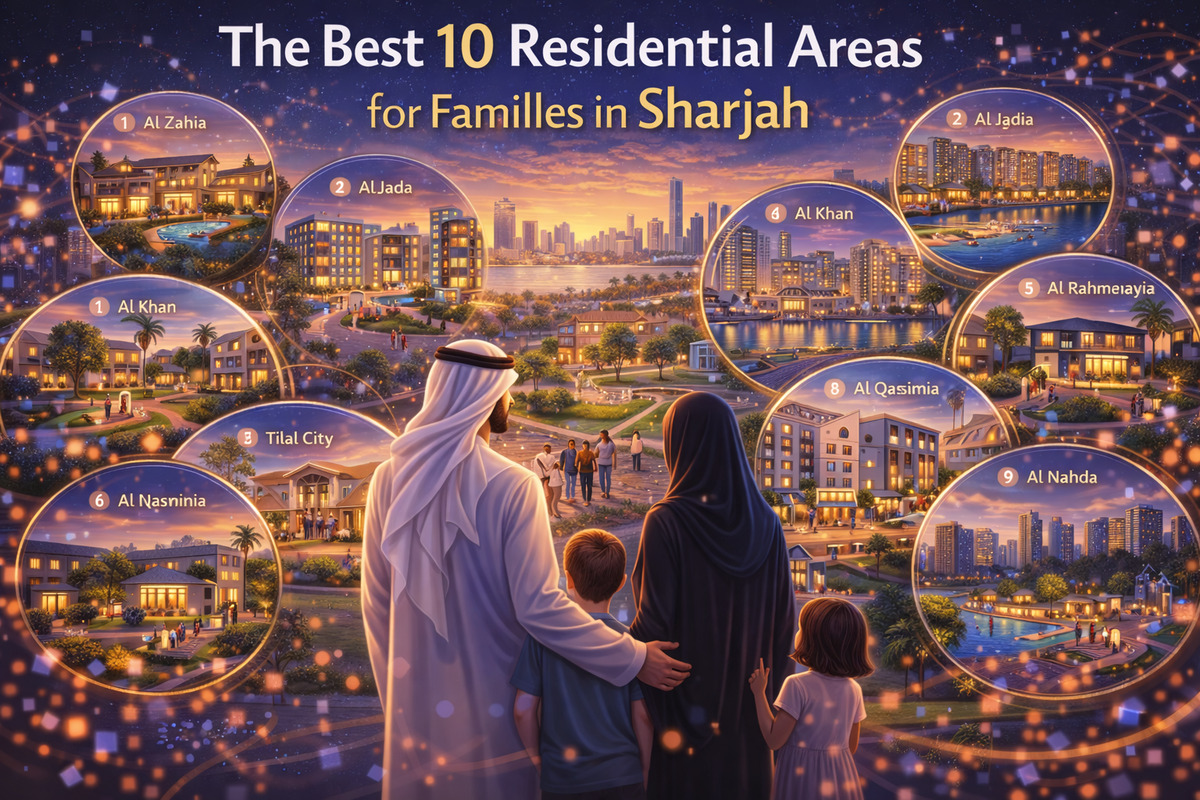
The Best 10 Residential Areas For Families In Sharjah
Sharjah stands out as one of the most balanced cities in the United Arab Emirates with a strong focus on family life. Thanks to its proximity to Dubai, more affordable living costs, cultural structure, and familyfriendly regulations, it is especially preferred by families with children. However, not every area in Sharjah offers the same quality of life. Factors such as access to schools, traffic density, social spaces, and safety play a decisive role when choosing a neighborhood. In this article, we examine the top 10 residential areas in Sharjah that are truly livable for families and offer both comfort and longterm value. To explore further details, visit Sharjahpropertyguide.
1. Al Majaz
Al Majaz is one of the first areas that comes to mind when talking about family life in Sharjah. The parks, walking paths, and children’s playgrounds around Al Majaz Waterfront provide a major advantage for families. The area is home to many international schools and nurseries. Public transportation connections are strong, and access to Dubai is relatively convenient.
Who is it ideal for? Families who want to live in the city center, close to social life, yet still enjoy a familyfriendly environment.
2. Al Khan
With its sea views, coastal walking paths, and calmer atmosphere, Al Khan is especially suitable for families with young children. The area features modern apartment buildings, gated communities, and familyoriented social spaces. In addition, attractions such as the Sharjah Aquarium and nearby beaches offer extra benefits for children. Here, you can enjoy a peaceful and relaxed life with your family.
3. Muwaileh (Muwaileh Commercial & New Muwaileh)
In recent years, Muwaileh has become one of the fastestgrowing family-oriented areas in Sharjah. The presence of many international schools (British, Indian, IB) makes it particularly attractive to families. Rental and purchase prices remain well balanced considering the amenities offered. Additionally, the high concentration of schools and close proximity to Dubai exit routes make Muwaileh a highly practical choice.
4. Al Nahda
Thanks to its close proximity to the Dubai border, Al Nahda is ideal for families who work in Dubai but prefer to live in Sharjah. The area is surrounded by shopping malls, clinics, and schools. However, traffic congestion can occur during peak hours.
Who is it suitable for? Families who commute daily between Dubai and Sharjah.
5. Al Taawun
Al Taawun stands out for its strong social life thanks to its proximity to the Al Qasba Canal. Restaurants, cafés, children’s activity areas, and walking paths significantly enhance the quality of life for families. In addition, many residential buildings in the area offer spacious apartment options specifically designed for families.
6. Al Qasimia
With its more traditional yet secure neighborhood structure, Al Qasimia is one of the preferred areas for families who have lived in Sharjah for many years. It offers easy access to schools, healthcare centers, and parks. Its budgetfriendlynature is also a major advantage.
7. Al Rahmaniya
Al Rahmaniya stands out for families seeking a villa lifestyle. Wide streets, detached homes, and a calm atmosphere make it ideal for families with children. Although it is located away from the city center, it offers more space and privacy.
Who is it ideal for?Families who want a villastyle lifestyle away from crowded areas.
8. Tilal City
One of Sharjah’s planned development projects, Tilal City attracts attention with its modern infrastructure and green spaces. Schools, parks, and shopping areas are all designed within a master plan. It is a strong alternative for families considering long-term residence.
9. Al Juraina
Known for its proximity to University City, Al Juraina is suitable for families who want to live in an education-focused environment. The area is quiet, wellorganized, and features newly developing residential projects. At the same time, it reflects Sharjah’s cultural character.
10. Al Suyoh
Al Suyoh is a newer but promising area that attracts families with its affordable villa and townhouse options. Thanks to ongoing school projects and infrastructure investments, it is expected to become even more attractive for family living in the coming years.
What Should Families Consider When Choosing a Neighborhood?
When selecting the right area for family living in Sharjah, the following criteria should definitely be taken into consideration:
- Proximity to schools and the types of schools available
- Daily traffic conditions and commute time to work
- Parks, playgrounds, and social facilities
- Access to healthcare centers
- The area’s long-term development potential
Every family has different priorities; therefore, the “best neighborhood” is the one that best fits the family’s lifestyle.
Sharjah offers families a safe, culturally balanced, and economically sustainable lifestyle. With the right neighborhood choice, these advantages become even more meaningful. Areas that successfully balance schools, transportation, and social life are important not only for today but also for longterm happiness and stability.For families who want to live in Sharjah, choosing the right neighborhood is the key to quality of life.
Contributed by GuestPosts.biz